Walk into a cinema. The lights dim. The trailers roll. And then the movie starts — with captions already on the screen for everyone.
No special device. No personal subtitle screen. No separate equipment.
That’s an open caption movie.
If you’ve ever wondered what that means, who it’s for, how it’s different from regular subtitles, or whether it changes the cinematic experience — you’re in the right place. This guide breaks it all down in a human, practical way — no jargon, no fluff.
Whether you’re Deaf or hard of hearing, attending with someone who is, learning English, watching with kids, or simply curious about accessibility in film, this article will answer every layer of your intent.
Let’s start at the beginning.
What Is an Open Caption Movie? 🎞️
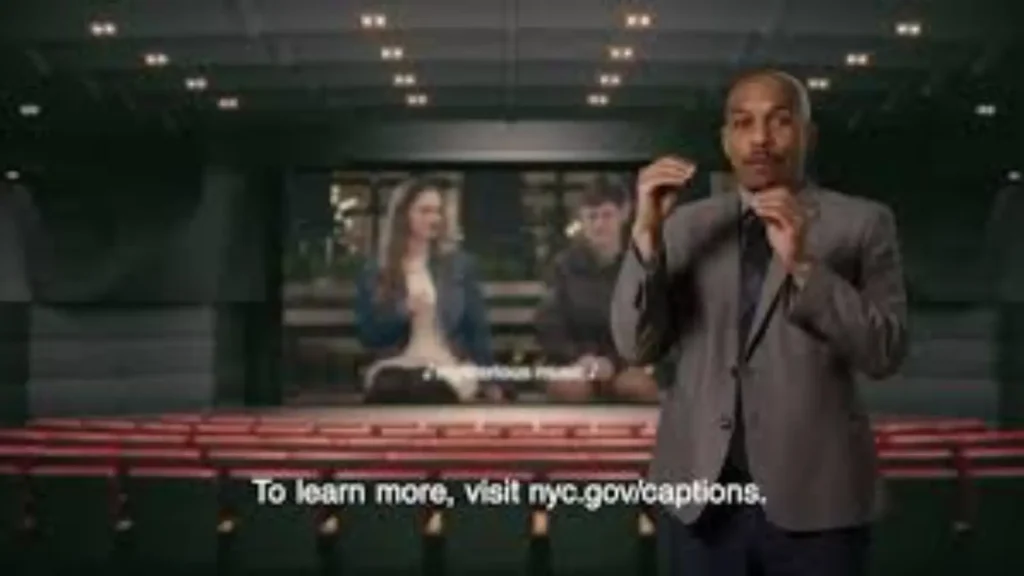
An open caption movie is a film shown in theaters with captions displayed on the screen for the entire audience. These captions are always visible and cannot be turned off.
Unlike closed captions (which require personal devices), open captions are built directly into the screening experience.
In simple terms:
-
The dialogue appears as text on the screen.
-
Important sounds (like [door slams] or [dramatic music intensifies]) may also appear.
-
Everyone in the theater sees the captions.
-
No special equipment is required.
Think of it like watching a streaming show with subtitles on — except you’re in a cinema and the captions are permanent for that screening.
Open Caption vs. Closed Caption: What’s the Difference? 🔍
This is where confusion usually happens.
Here’s the practical breakdown:
🎬 Open Caption (OC)
-
Captions are visible to everyone.
-
No devices required.
-
Text is projected directly onto the movie screen.
-
Often scheduled as specific showtimes.
🎧 Closed Caption (CC)
-
Requires a personal device provided by the theater.
-
Only visible to the user wearing/holding the device.
-
Can be turned on or off.
-
Sometimes unreliable due to device issues.
Many moviegoers prefer open captions because:
-
There’s no tech hassle.
-
It creates a shared experience.
-
It feels more natural and integrated.
Why Open Caption Movies Matter 🧠💛
Open captions are more than convenience — they’re about accessibility and inclusion.
1. Accessibility for Deaf and Hard of Hearing Audiences
Open captions ensure full participation without extra equipment.
2. No Equipment Barriers
Closed caption devices can malfunction. Open captions eliminate that stress.
3. Shared Experience
Everyone in the theater sees the same content — no isolation.
4. Language Support
Non-native English speakers benefit from reading dialogue.
5. Better Comprehension
Even hearing viewers catch subtle lines they might otherwise miss.
Who Benefits from Open Caption Screenings? 👥
You might think it’s only for one group — but that’s not true.
Here’s who commonly attends open caption movies:
-
Deaf audiences
-
Hard of hearing viewers
-
Seniors with hearing challenges
-
ESL (English as a Second Language) learners
-
Neurodivergent viewers who process text better
-
People who struggle with heavy accents in films
-
Parents watching movies with kids
-
Anyone who simply prefers reading along
Accessibility often ends up benefiting far more people than initially expected.
What Do Open Captions Look Like on Screen? 👀
Open captions typically:
-
Appear at the bottom of the screen.
-
Use high-contrast text (often white or yellow).
-
Identify speakers when necessary.
-
Include relevant sound descriptions.
-
Stay synced with dialogue timing.
They are designed to be readable without distracting from the visuals.
After a few minutes, most viewers stop consciously noticing them.
How to Find Open Caption Movie Showtimes 🗓️
Finding them is easier than many people think.
1. Check Theater Websites
Major chains often label screenings as “Open Caption” or “OC.”
2. Use Accessibility Filters
Some sites allow filtering by accessibility features.
3. Ask at the Box Office
Staff can confirm open caption schedules.
4. Look for Designated Weekly Slots
Many theaters offer OC screenings once a week.
The frequency varies by location, but demand is increasing.
Are Open Caption Movies Common? 📈
They’re becoming more available — but not universal yet.
In countries like the United States, open caption screenings are:
-
Often scheduled during matinees.
-
Sometimes limited to specific days.
-
Expanding due to community advocacy.
Major cinema chains such as AMC Theatres, Regal Cinemas, and Cinemark now regularly offer open caption screenings in many locations.
However, availability depends heavily on region.
Do Open Captions Distract From the Movie? 🎭
This is one of the most common concerns.
Here’s the honest answer:
For first-time viewers, captions may feel noticeable for the first 5–10 minutes. After that, the brain adapts.
Research in reading behavior and viewer feedback consistently shows:
-
Most people quickly adjust.
-
Captions don’t reduce emotional impact.
-
They can enhance clarity.
In fact, many hearing viewers leave saying they appreciated catching subtle lines.
Are Open Captions the Same as Subtitles? 📚
Not exactly.
Subtitles typically:
-
Translate dialogue.
-
Focus mainly on spoken words.
Captions (especially open captions):
-
Include dialogue.
-
Describe important sound effects.
-
Identify off-screen speakers.
-
Indicate tone where necessary.
So while they look similar, captions are more comprehensive.
Open Caption Movies and Inclusivity in Cinema 🌍
Open captions represent a shift in mindset:
From:
“Accessibility as a special accommodation.”
To:
“Accessibility as standard practice.”
This shift mirrors broader movements in inclusive design — making experiences usable for more people from the start.
Film studios and streaming platforms have normalized captions at home. Now theaters are catching up.
Do Filmmakers Support Open Caption Screenings? 🎥
Many do.
Directors and producers increasingly recognize:
-
Dialogue clarity matters.
-
Representation matters.
-
Accessibility expands audiences.
Some independent filmmakers even advocate for universal caption screenings.
The cultural conversation around accessibility has evolved significantly in recent years.
The Future of Open Caption Movies 🚀
Where is this heading?
Trends suggest:
-
Increased demand from younger audiences.
-
More advocacy from disability rights groups.
-
Greater normalization through streaming habits.
-
Broader inclusion policies in entertainment.
It’s possible that in the future, captioned screenings will feel as ordinary as 3D or IMAX options.
Accessibility is no longer niche — it’s expected.
Conclusion🎬❤️
An open caption movie isn’t just about words at the bottom of the screen.
It’s about:
-
Inclusion.
-
Equal access.
-
Shared experiences.
-
Removing friction.
-
Making cinema welcoming to everyone.
Whether you attend one for accessibility, clarity, language support, or curiosity — you’re participating in a more inclusive version of entertainment.
The next time you see “Open Caption” listed as a showtime option, consider trying it.
You might discover that reading along doesn’t take away from the magic of film — it deepens it.
And for many people, it makes the magic possible in the first place.
Mark Twain apni humorous aur adventurous stories ke liye jane jate hain. Unki famous book Adventures of Huckleberry Finn hai.